Olawole Oluwasuji, a Prof. at Adekunle Ajasin University, Akungba Akoko, has proposed the diversification of Nigeria’s economy through sustained investment in agriculture, manufacturing, and the creative industries. He warned that a nation heavily reliant on oil exports and imported technology cannot claim full autonomy, because its sovereignty remains constrained by the conditions of external markets.
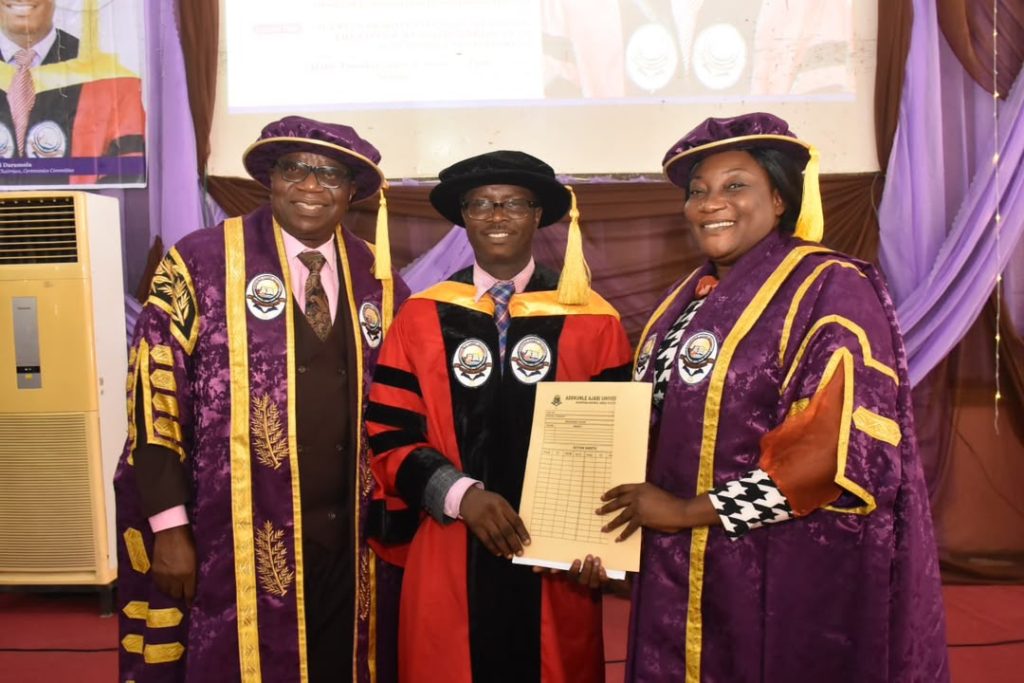
Prof. Oluwasuji, a scholar of Political Science and Public Administration, gave this recommendation on Tuesday,June 9, 2026 while delivering the institution’s 65th inaugural lecture titled, “Nigeria’s Fragile Economy: Removing the Contours and Roadblocks to Sustainable Development.”
Discouraging the practice of a monolithic economy – where a country’s earnings depend heavily on one sector – as regressive, he cited the insecurity in the Niger Delta region, where most onshore oil production takes place. He noted that the unrest has resulted in significant production losses since the 2000s, saying: “It is more hazardous as the nation’s oil output is the worst hit, with the loss of 600,000 barrels of crude oil per day. Nigeria’s daily oil revenue loss for 2006 was a whopping $700,000,000.”
The Don also bemoaned the dependence of Nigeria’s economy on the global economy, citing the impact of the global recession and the Covid-19 pandemic on the local economy. He explained that the latter led to a decline in oil prices of 55% between the last quarter of 2019 and April 2020.
According to him, this compelled the federal government to review the earlier projected revenue collections set at 8.24 trillion naira, based on an oil price benchmark of $57 per barrel and 2.2 million barrels per day. “This Covid-19-induced liquidity squeeze has certainly undermined the capacity of the federal and state governments to implement policies and programmes designed to reduce poverty and promote inclusive growth and development,” he added.
Prof. Oluwasuji further highlighted several other factors hindering Nigeria’s self-reliance, including corruption, insecurity, policy instability, nepotism, youth agitation, ineffective past policies, lack of continuity in government programmes, human capital deficit, weak institutional frameworks, and policy inconsistency. He noted that these internal fragilities create external vulnerability, arguing that when fiscal or energy systems depend on external inputs, political autonomy becomes negotiable.
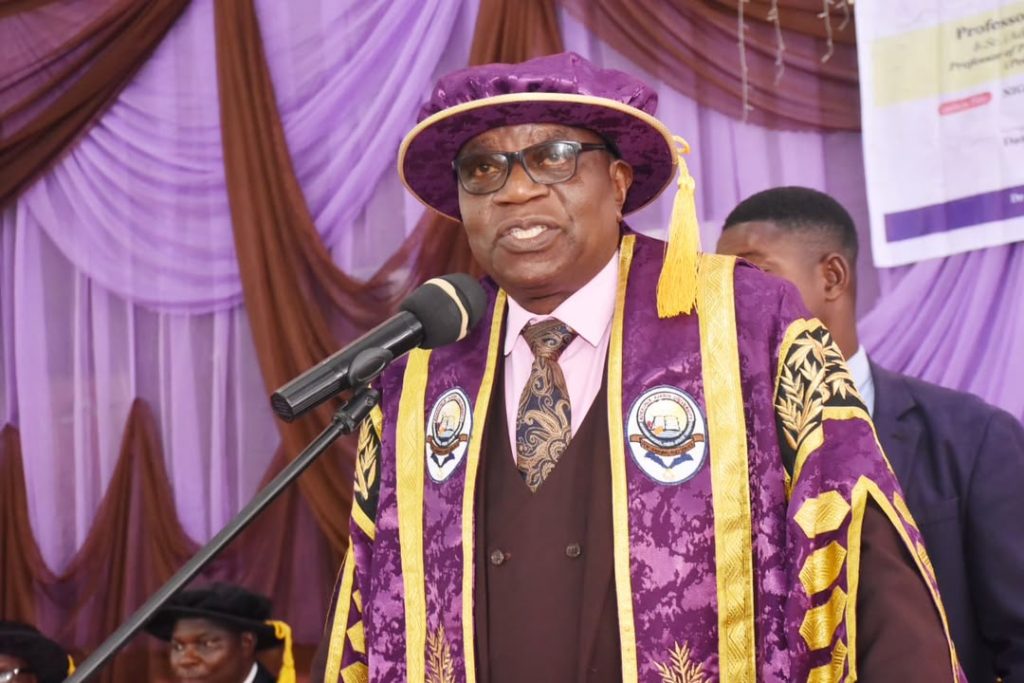
Proposing sustainable development as the infallible path to national independence, the inaugural lecturer stated: “Nigeria possesses a combination of human resources, natural endowments, and geopolitical weight that can, if effectively harnessed, translate into sustainable autonomy. Achieving this goal, however, requires coherent policies, disciplined leadership, and strategic foresight.”
In this context, Prof. Oluwasuji recommended the repositioning of Nigeria’s economy through productive diversification of export commodities, and a focus on the manufacture of local intermediate goods such as textiles, pharmaceuticals, and electronics to reduce dependence on imports. He also cited the need to prioritise investment in science, research, and innovation, and the development of indigenous technological capacity to enhance Nigeria’s autonomy.

According to him, these can be done by strengthening research institutions such as the National Agency for Science and Engineering Infrastructure (NASENT), the National Information Technology Development Agency (NITDA), as well as universities, through predictable funding and merit-based governance. He added that Nigeria must invest in data protection, satellite surveillance, and artificial intelligence for enhanced national security applications and self-reliance.
Prof. Oluwasuji further proposed the autonomy of anti-corruption agencies such as the EFCC and ICPC from political interference to strengthen transparency and accountability, and to restore public trust. He correspondingly called for the introduction of capital punishment to deal with corruption and its effects on Nigeria, saying that the anti-corruption measures currently in place are ineffective against corruption in the country.
The Don stressed the importance of engaging Nigeria’s youth population, as exclusion, unemployment, and poor education limit the country’s capacity to achieve the Sustainable Development Goals. He suggested that the education system should be restructured and massively funded to align with national industrial and technological needs.

To prevent skilled professionals from migrating in search of “greener pastures”, Prof. Oluwasuji appealed to the government to create conditions that reward merit and provide opportunities for young people.
Earlier, while introducing the inaugural lecturer, the Vice Chancellor and Chairman of the Occasion, Prof. Olugbenga Ige, defined inaugural lectures in the university as an institutional contribution to both human and national development. He commended Prof. Oluwasuji for contributing to this institutional mandate through his scholarly work and commitment to development.